



 Login
Login




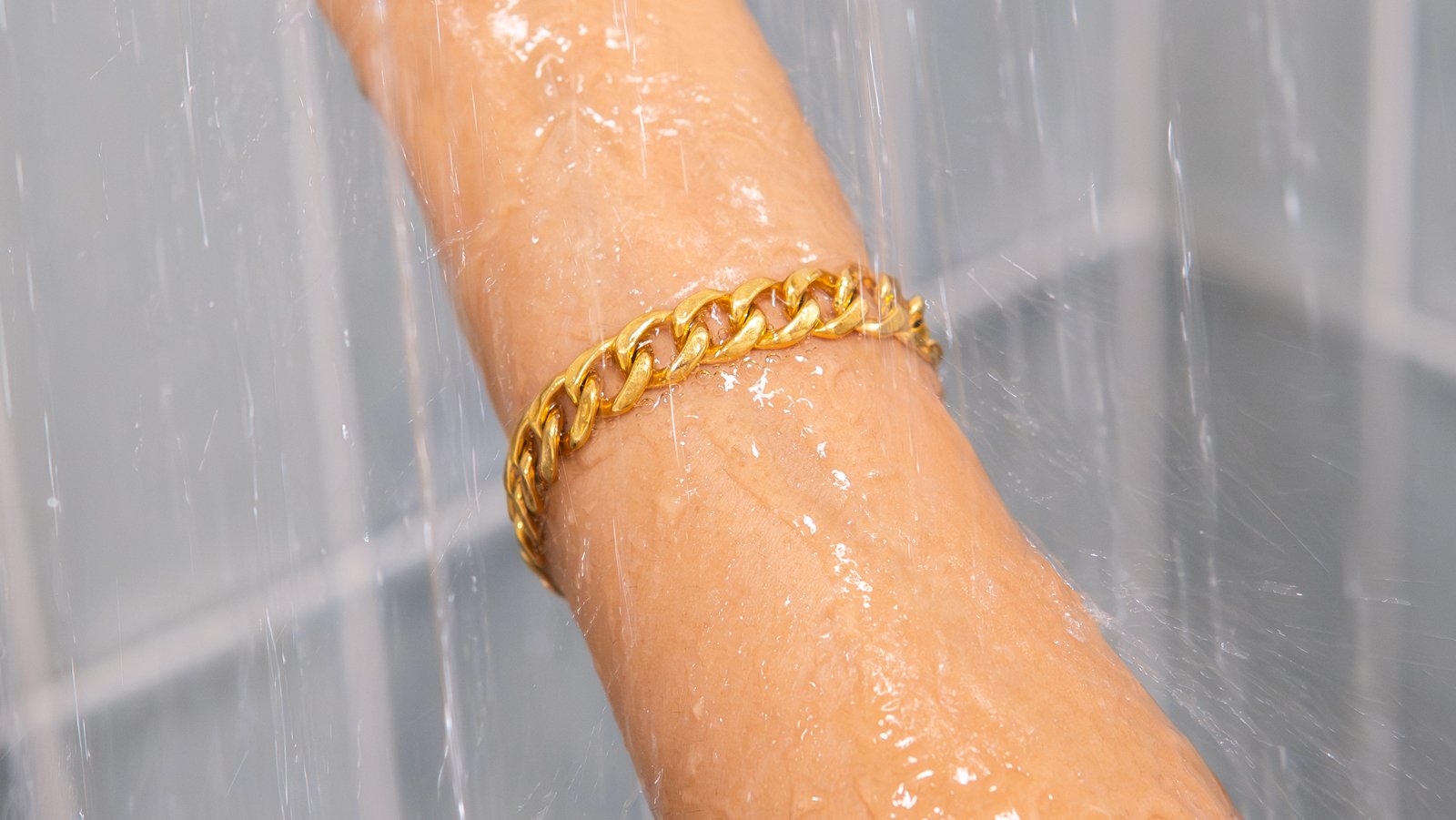
Before stepping into the shower, you glance at the ring on your finger, the necklace resting against your collarbone — and hesitate. Should you take them off?
Some people have worn the same pieces for years without ever removing them. But here's what most people get wrong: what gold jewelry fears isn't water.
Gold isn't as fragile as you think
The short answer
Plain water generally does not damage gold. It doesn't rust. It doesn't oxidize the way silver does. Washing your hands, taking a shower, everyday contact with water — none of that alone will harm your pieces.
That's why many people have gold jewelry they've worn since childhood that still looks beautiful, despite years of daily exposure to water.
But in the bathroom, what your jewelry actually comes into contact with is rarely just water.
What actually damages gold jewelry
Many people think gold becomes dull because of water. In reality, the more common culprits are:
- Body wash and shampoo
- Perfume and hairspray
- Skincare products and sunscreen
- Household cleaning agents
- Chemical residue that builds up over time
These substances slowly accumulate on the surface. Over time, your jewelry may not be structurally damaged — but it will start to show it:
- Loses its original shine
- Surface turns cloudy or dull
- Fine details trap dirt and grime
- Joints and settings collect residue
This is especially true for pieces with gemstones, engravings, or hollow designs — they tend to hold onto buildup far more easily.
So — can you shower with gold jewelry?
You can. But it's not a great long-term habit.
If you occasionally forget to take your jewelry off, there's nothing to stress about. But if you wear it in the shower every day — especially around soaps and cleaning products — it will gradually affect how the piece looks and holds up.
These types require extra attention:
- Gold alloys (14K, 18K)
- Plated or vermeil pieces
- Anything with gemstone settings
Good care is simpler than you think
✦ Wipe after wearing
A quick wipe removes sweat, oils, and product residue before they build up.
✦ Store separately
Keep pieces apart when not in use — friction and scratching add up over time.
✦ Check the hardware
Clasps and connections usually show signs before they break. Catch it early.
The goal isn't to keep your jewelry "like new." It's to help it stay with you longer.
The most cherished pieces aren't the brightest ones — they're the ones that have spent a long time with someone.
Truly loved jewelry often carries traces of daily life. That's not damage.
It's the mark of time.
So less worry about whether gold can get wet — and more attention to how you're caring for it.


